Categories
Empowering Smart Driving for All: BYD and InvisionTech Launch Cost-Effective Triple-Camera Vision Solution
Discover how BYD and InvisionTech are revolutionizing autonomous driving with an 8MP triple-camera system, offering affordability and mass production readiness.
Apr 3rd,2025
1350 Views
Yesterday, BYD's highly anticipated intelligent strategy conference was held in Shenzhen. The "Eye of God" was unveiled, aiming to lower the threshold for the use of intelligent driving through technological innovation and promote the popularization of intelligent driving for all people.Among them, the Eye of God C, where the three-eye vision solution is located, belongs to the pure vision route. Compared with the solution equipped with laser radar, it has greatly reduced the hardware cost, perfectly matches BYD's core concept of "smart driving equality", and has become one of the focuses of the conference.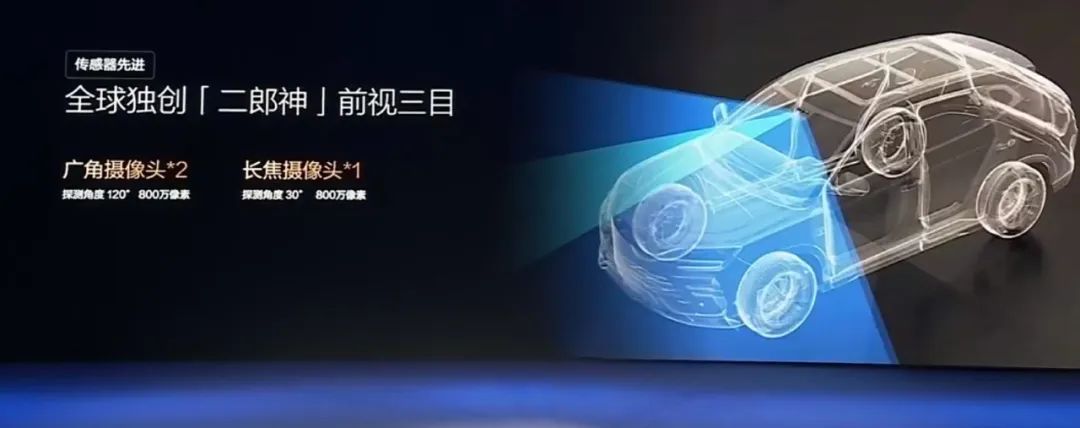 However, to realize the three-eye vision solution, companies first need to overcome many technical difficulties.• In terms of structure, three cameras need to be reasonably arranged in the limited vehicle space to ensure that their optical performance is not interfered with; the parameter adjustment of different cameras needs to be accurately matched to ensure the consistency and stability of the image; at the same time, the structural stability of the camera in a high temperature environment needs to be guaranteed; in addition, hardware simulation analysis also needs to deal with high technical complexity, high cost and resource investment, as well as complex and changing application scenarios and interdisciplinary collaboration needs.
• In terms of hardware, the product must comply with ISO26262 functional safety level B or above, and information security must meet the latest mandatory regulations of GB 44495-2024. At the same time, the product must have a high-quality optical system, a high-performance image sensor, and a powerful image signal processor to ensure that the image performs well in key indicators such as resolution, color reproduction, contrast, and noise control.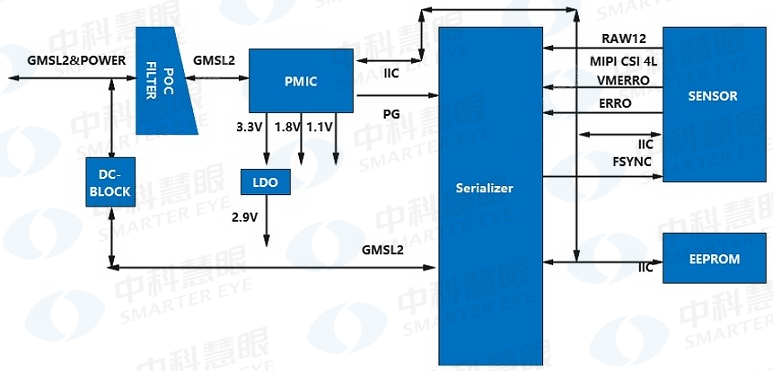 Secondly, companies need to meet various mass production conditions.• Process complexity and cost: The three-eye camera requires multiple lenses to work together, and the distance and angle between the lenses must be precise. The hardware cost of the multi-eye camera is many times that of the single-eye camera, and the algorithm complexity and processing chip requirements are also higher.• Strict automotive certification: Automotive-grade cameras must meet requirements such as high temperature resistance, shock resistance, and long life. The certification cycle is as long as 2-3 years, and must comply with standards such as IATF16949 and AEC-Q series.
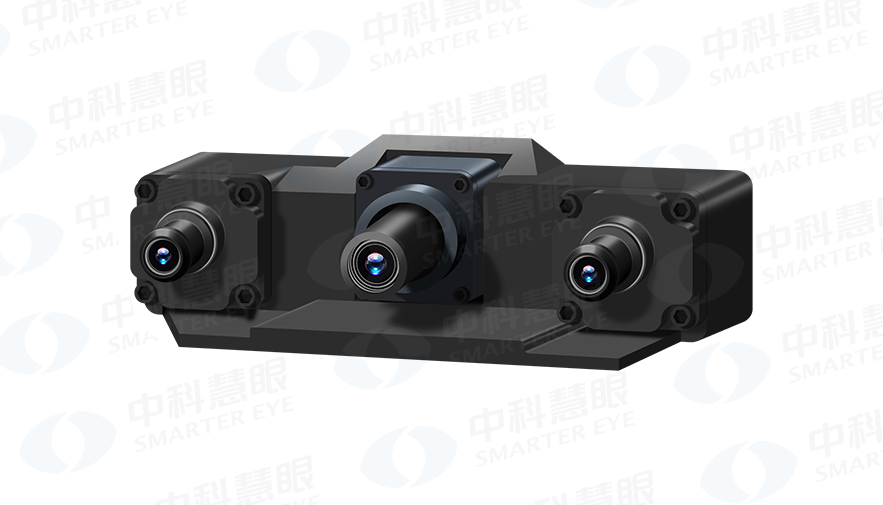 As an industry leader in in-vehicle stereo vision technology, SmartEye has also overcome technical and mass production difficulties, launched a front-view 8-megapixel three-eye vision product, and will achieve mass production in 2024.SmartEye's three-eye solution consists of two wide-angle 8-megapixel camera modules and one telephoto 8-megapixel camera module. Through the coordinated work of cameras with different viewing angles, it can achieve all-round perception of the environment in front of the vehicle. The two wide-angle cameras can cover a wide horizontal and vertical viewing angle range, while the telephoto camera focuses on details in the distance, thus achieving a combination of a large field of view and long-distance detail observation.
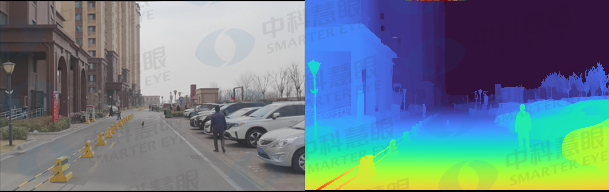 Among them, SmartEye's calibration technical indicators have the following advantages:• Binocular baseline alignment error <0.2pixel• Monocular measurement error <0.15%• Ranging error <1.5%@20m• Reprojection error <0.2pixel• COD accuracy <10pixel• The structural stability maintenance indicators of the binocular camera are:• Polar alignment error change <0.2pixel• Ranging error change <1.5%Based on the principle of stereo vision, SmartEye's three-eye vision product can realize road preview function, all-terrain detection function, and passability detection function through the combination of hardware products and IP algorithms.1. Road surface preview function1.1 Elevation curveIt can densely detect the elevation changes of the road surface within a certain range in front of the vehicle and output data to the outside.1.2 Road surface excitationDetect the undulation of the road surface, identify the impact excitation events that may exist in the left and right wheel track areas, and output the graded signal according to the excitation degree of the event, which is used by the chassis controller to adjust the working state of the suspension system and improve the vehicle's smoothness experience.
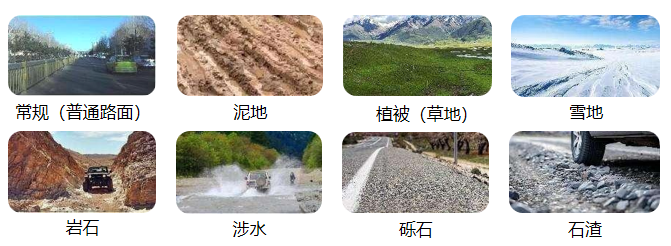
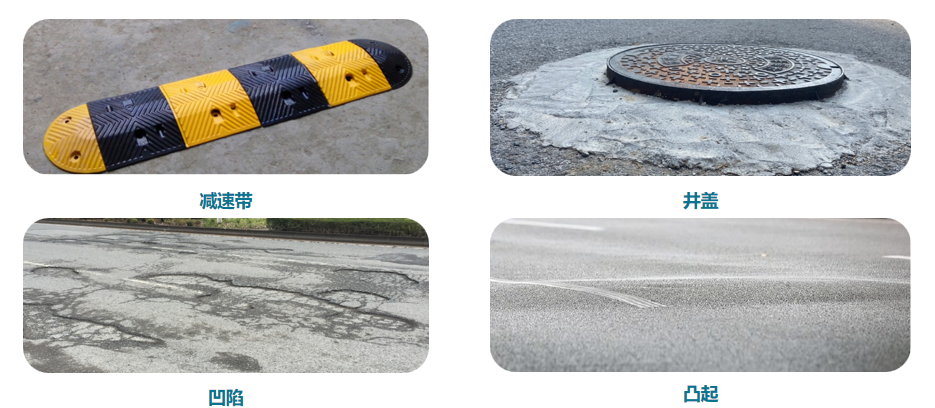 1.3 Slope detectionMeasure and determine the inclination of the terrain or road, adapt to the special needs of ramp driving in advance, and improve vehicle driving safety and operational stability.2. All-terrain detection functionIt can detect the landform type within a certain range ahead, and give the landform type classification result and confidence. The product supports the identification of different road scenes such as ordinary hard road, grass, gravel ground, ice and snow ground, muddy ground, thick sand ground, rock ground, wading, etc.
 3. Passability detection function3.1 Height and width limit detectionThrough the forward visual perception algorithm, the height and width of the passable area are intelligently identified, and the user is actively reminded of the risk of passing, so that the driver can pass with peace of mind with the assistance of accurate images, avoiding the vehicle from scratching or taking a long detour.
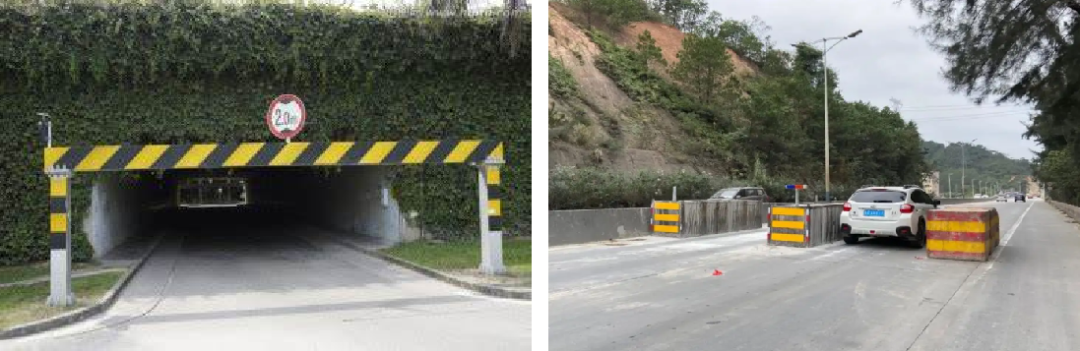 3.2 Chassis obstacle detectionThrough the forward visual perception algorithm, the size of ground obstacles in the passable area is intelligently identified; the user is actively reminded of the risk of passing, and the active suspension is accurately linked to control, so that dangerous sections can be easily passed.3.3 Passable area detectionThrough the forward visual perception algorithm, the detection capability of the drivable area is improved, and the environment such as road collapse, road spillage, and landslide can be identified and judged whether it can be passed safely and smoothly.At present, Zhongke Huiyan focuses on the fields of intelligent driving and intelligent suspension. Its pre-aiming systems based on three-eye and binocular stereo vision, ADAS all-in-one machines and other products have been designated for mass production by dozens of leading new energy vehicle companies, providing a new generation of intelligent driving and intelligent chassis forward perception hardware solutions for many models.
 At present, Zhongke Huiyan focuses on the fields of intelligent driving and intelligent suspension. Its pre-aiming systems based on three-eye and binocular stereo vision, ADAS all-in-one machines and other products have been designated for mass production by dozens of leading new energy vehicle companies, providing a new generation of intelligent driving and intelligent chassis forward perception hardware solutions for many models.The convening of the "Eye of God" conference marks that intelligent driving technology has entered a new stage of development. As one of the key technologies, the three-eye 8-megapixel vision solution not only provides cost-effective intelligent driving solutions for the mid- and low-end models of leading new energy vehicle companies, but also provides new ideas and directions for the development of the entire industry.In the future, with the continuous investment of the automotive industry in technology research and development and innovation, the popularization and intelligence of intelligent driving technology will become an important trend in the automotive market.

